Design development is considered to be the most prominent phase of a construction project as it is the initial point of a project in giving a pictorial form to ideas and conceptualizing them through designs. The CAD solutions that are used to develop these designs are equally important as they assist the project users to create accurate, precise, and innovative designs for diverse projects despite the niche.
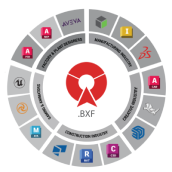
However, at some point in the project timeline the need to convert and exchange the created CAD designs jumps in and that requires a compatible transfer mechanism to enhance ideal interoperability. An interoperable model conversion will allow the users to transfer the solution without any hindrances and those designs can be utilized by the users, which means they can access the original design and customize them as per the requirement. That said, in this blog we will drive into the top 10 use cases of CAD interoperability and the solution of BIMDeX to offer such impeccable CAD interoperability.
What is CAD Interoperability
We said CAD design software is essential for the creation of 2D and 3D designs for the project; there are various software solutions here and each project will prefer one based on their requirements. When the need is to collaborate for a project, the users will need to exchange and transfer the designs with other teams to streamline the project. This is called CAD Data Exchange. This important needs to be effective in promoting better collaboration and other aspects of better project evolution and progression. That is possible with effective interoperability-friendly CAD data exchange.
CAD interoperability directly means the ability of the different CAD systems to exchange and transfer the designs with respective solutions and make use of design data without any misconceptions. Often the CAD data exchange without proper interoperability lacks compatibility, and this can be due to the difference in file formats that each software has. The CAD data exchange without interoperability might cause distortion in models and therefore deviate the design data information and eventually increases rework and affects collaboration.
10 Use Cases of CAD Interoperability
Having said about CAD interoperability, here are the use cases that it offers to a project despite the niche and improves the overall collaboration and progress.
1. Data Accumulation With CAD Interoperability
Gathering the CAD data is one impulsive method for a project to progress better and in that case, it is important to carry the essential data from one CAD software to the other. This process is called CAD data exchange, and having the the transfer in an interoperable way is even more important.
CAD interoperability ensures a bridge between the software solutions better and improves compatibility between the solutions, and this can assist the data accumulation even further. A solution like BIMDeX can make this even better by offering diverse solutions to streamline interoperable model translation and eventually data accumulation.
2. Collaboration Across Design Platforms
Each project is unique and has teams and their respective software and that can be SolidWorks, AutoCAD and more. The teams can create their own designs from the respective software and when there is a need to collaborate, the designs have to be shared and exchanged. The collaboration that comes through this process will allow the project teams to stay on the same page and take informed decisions.
CAD interoperability can enhance this collaboration by allowing the project teams to convert the files from one CAD software to another like from SolidWorks to AutoCAD without any misconceptions with file format. CAD interoperability can provide a compatible open file format, and that leaves the file format to collisions behind and allows better cross-platform collaboration.
3. Diverse Discipline Design Integration
Since a project is made up of various professionals, at certain points each professional may need to collaborate with others to ease design integration. Engineers, Architects and Manufacturers may need to deploy and integrate mechanical, electrical and plumbing designs to bring a Federated model.
This is possible through interoperable CAD conversion as the professionals with respective design solutions can streamline CAD file conversion better and later the cohesive model.
4. Avoiding Problems Caused During File Translation
CAD data conversion usually has certain limitations of data conversion like corrupted files, missed interferences, file data deviations and more. These limitations often delay the whole process of project evolution and put effective collaboration at risk.
CAD interoperability can be remedy for this situation as it allows credible model conversion from one software to another without leaving any residues unless customized as per preferences.
5. Streamline Simplified Model Conversion
Preferences are essential when it comes to converting the CAD design data information; this can be possible with CAD interoperability. A professional with the respective software can simplify the model and preserve all the integral information if required, translating only the essential information and not the whole model. This way of customizable model translation protects desirability and ideal model translation.
6. Architecture and Construction collaboration
Since collaboration is inevitable, it comes to Architects as well as they need to connect with construction engineers for project evolution. Architects use conceptual software like SketchUp wherein the Design and construction professionals use BIM software like Revit.
CAD interoperability assists here with connecting the BIM software with CAD and streamlines data conversion with all the inclusive information without missing any integral information.
7. Product Lifecycle Management (PLM)
With CAD interoperability, the CAD data can be integrated to PLM systems like PTC Windchill where the data can be managed as library files and linked with lifecycle management processes.
CAD interoperability ensures the PLM as it promotes better version control, document management, and allows the whole project team to access the files and stay on the same page for effective Project Lifecycle Management.
8. Product Design Customization
In certain manufacturing units the customers would need to customize the designs, and they might use web-based CAD tool to customize the created designs. The changes are later shared with the manufacturer for production.
This process can be eased with CAD interoperability as the preferable customizations are recorded perfectly and are shared with the manufacturer to purpose it without any misconceptions.
9. Change Management
A CAD model can undergo various changes at many successive stages, and it is tedious to record the changes and transfer the model over and over again. This can be avoided by change management as it allows the users to transfer only the changes from one software to another.
CAD interoperability allows the users to connect different software solutions without any misconceptions and allows the user to transfer only the model changes without any issues.
10. Enhanced Visualization
The way the 2D and 3D designs are visualized can directly impact the project perspective and the value. A collaborative design translation can allow users to compile the designs from various software and present them in an appealing way.
CAD interoperability can promote this visualization by allowing legit model translation with all the parameters. This eventually enhances the visual representation of the 2D and 3D designs.
Closing Thoughts
Since CAD software solutions are the essential factor for design and development for various construction and manufacturing projects, streamlining the design translation process will effectively assist in the whole project movement.
Having said about the Top 10 use cases of CAD data interoperability, getting in touch with the desirable solution that enhances better model translation will directly impact the data transfer. BIMDeX is one such ideal solution that builds compatibility with various CAD and BIM solutions and provokes better CAD data interoperability.