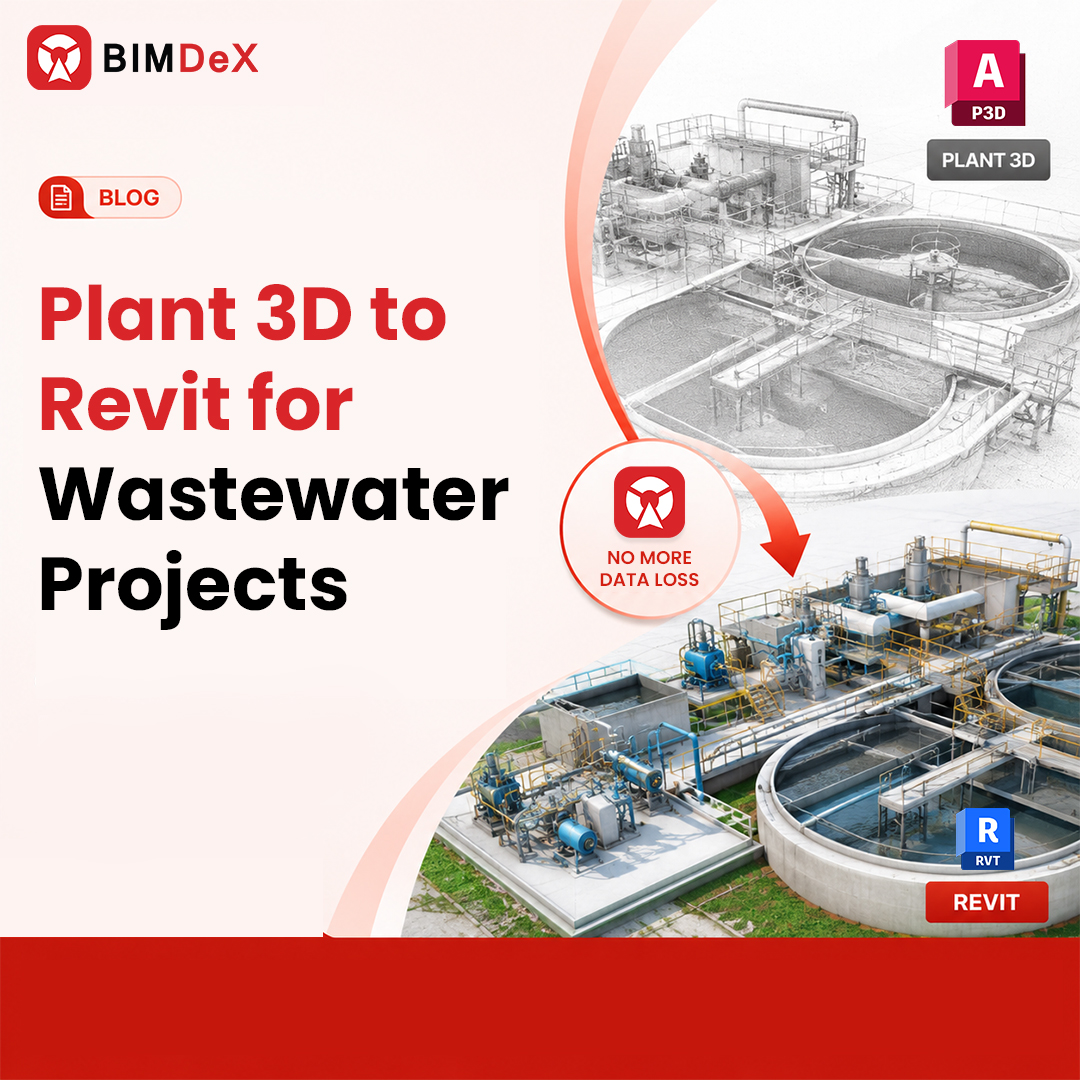
Plant engineering is one of the most complex workflows around, integrating piping, mechanical, electrical, structural, and plumbing into one cohesive set of drawings. Unlike a standard building or traditional mechanical project, a plant project requires razor-sharp accuracy due to dense piping systems, hazardous equipment, and safety-critical systems. Designers may use specialized programs like AutoCAD Plant 3D, Tekla Structures, SolidWorks, Revit, and sometimes a combination of these.
Plant project interoperability is significantly more difficult compared to a standard construction project due to dense modeling, complex geometry, and maintaining data beyond simple shapes. Without a structured solution and interoperability tools, data is split into silos, creating coordination problems. These problems can cause project timelines to increase, costs to escalate, and quality to decrease.
To achieve interoperability in a project is to adopt technology solutions that today’s plant projects require to operate efficiently. This article discusses the challenges in a plant engineering project and how designers are overcoming these challenges in different ways.
Why Interoperability Is Critical in Plant Engineering?
In plant engineering projects, where precision and safety are paramount, every minor error or inconsistency leads to costly reworks, hazards, and delays. With interoperability, you can ensure that engineers, contractors, and other project teams coordinate effectively without losing any crucial project data.
Interoperability enables different software systems to share and interpret design data in a unified manner.
Data Integrity: Plant engineering models are not just regular drawings; these are geometries equipped with intelligence. Material properties, specifications, and operational parameters. This data is crucial for project quality.
Regulatory Compliance: Many industries, including plant engineering mandates using standardized models that adhere to various standards like ISO, ASME, and IEC.
Multidisciplinary Collaboration: Plant projects require the involvement of architects, civil engineers, mechanical engineers and engineers and contractors. Each discipline uses specialized tools. The absence of interoperability causes collaboration to fail.
Key BIM Interoperability Challenges in Plant Projects
1. Fragmented Software Tools
Plant engineering uses different tools for designing; Revit for architectural and BIM design, plant 3d for industrial and powerplant designs, SolidWorks/AutoCAD MEP for MEP designs (circuits, piping and mechanical components) and many more. Each of these tools has a unique purpose, making cross-collaboration is complicated.
2. Loss of Data
It is simple to convert the file format but translating the whole model to another format without losing its meta data and characteristics is a crucial task. Teams often face loss of data while converting from one design tool to another.
3. Complex Geometries and Density
Plant engineering models consist of numerous components and systems. Converting them and reusing them causes distortions and leads to missing data. Also, this makes the file bloated and causes loading issues.
4. Inconsistent Formats
Different teams may produce designs in their standard formats, even after bringing them to a common file format, it may be inconsistent. Harmonization is mandatory to maintain consistency in projects.
5. Scalability Issues
Plant engineering models are enormous and occupy large memory. Even with proper interoperability, designers trouble loading the designs and the respective components, ultimately affecting the model performance.
6. Version Control and Coordination Issues
Multiple teams working on the coordinated plant engineering project leads to formation of numerous versions, which piles up and creates conflicts. Without a centralized and shared interoperability solution, coordination issues persist.
How to Overcome BIM Interoperability Challenges
Interoperability is not an insurmountable challenge. Without a proper strategy, it can derail schedules, inflate expenses, and introduce complexity. Project teams can achieve workflow optimization through effective strategic implementation. Here’s a detailed look at how to overcome the most pressing issues:
Adopt Structured Data Exchange Workflows
Clearly define an outline for how the models will be shared, how often and what format. Establish specific responsibilities to each trade. Make sure everyone works with the common data environment and a common file format
Ensure Intelligence Preservation During Conversion
In plant engineering projects, geometry alone does not provide sufficient data for modeling. metadata carries specifications, performance data, and compliance information. Losing it undermines downstream processes.
Use Standardized Data Formats Where Applicable
Adhere to the standards wherever applicable. Adopt industry-specific standards to each trade, document the processes to ease the compliance checks. Standards provide a common language, reducing misinterpretation and ensuring long-term usability of data.
Automate Conversion and Integration Processes
Manual conversions are slow and prone to errors. Teams can miss crucial details while converting manually or when the conversion tool is not reliable.
Implement Centralized Coordination and Data Management
Version control and fragmented storage lead to conflicts. Implementing centralized coordination and data management tools like Autodesk BIM 360 and Enginero ensures a strict data management strategy, letting everyone work on the same version and reducing duplication errors.
Define Clear Interoperability Standards and Protocols
With no clear SOPs, teams lack protocols, leading to errors. Define clear rules and standards, enforce your teams to implement them. Train the team new regulations and software applications. Clear protocols reduce guesswork, align expectations and maintain consistency.
Role of BIMDeX in Solving Plant Interoperability Challenges
Plant engineering projects demands for seamless collaboration and involvement of different project teams. Without a proper interoperability, collaboration backlogs, and leading to various project losses. This is where tools like BIMDeX steps in.
BIMDeX, a specialized solution designed to bridge these gaps, ensuring interoperability challenges no more associated with the teams and do not disrupt project efficiency.
Flawless conversion: BIMDeX converts directly from one native CAD/BIM application to another. With customized export plugins, you can convert the models to a uniformed design format known as BXF file, which can be imported to any CAD/BIM applications without changing any design aspects through BIMDeX’s custom importer plugins.
Preservation of Intelligence: Unlike other converters that lack the project’s intelligence data, BIMDeX preserves it, including properties, meta data, equipment tags and much more, preserving the project’s integrity.
Automation: BIMDeX allows batch conversion, ensuring many models get converted automatically with no manual efforts. You can customize conversions based on your workflow requirements and reduce the manual effort.
Best Practices for Plant BIM Interoperability
Plan Early: Define standards and workflows at project initiation
Use a Common Data Environment: Centralize model storage and coordination
Prioritize Metadata: Ensure conversions retain intelligence, not just geometry
Automate Where Possible: Reduce manual effort with automated conversion tools
Train Teams: Educate engineers on interoperability standards and tools
Monitor and Audit: Regularly check data integrity and workflow efficiency
Leverage Specialized Tools: Use solutions like BIMDeX for complex conversions
Closing Thoughts
The successful execution of plant engineering projects depends on interoperability which serves as their fundamental requirement. The project requires multiple trades to work together while sharing their databases and using their resources without starting unnecessary expenses. Project teams can develop effective solutions by identifying their main obstacles which include fragmented systems and data loss and lack of standardization and complex geometric data and inefficient manual processes and difficulties with version tracking. The organization needs to establish workflows with defined procedures which require file formats and system automation and components to be centralized and their operational methods to be well-documented.
The BIMDeX solution enables organizations to perform intelligent data exchange between different systems while maintaining high operational efficiency. The solution helps businesses by decreasing the need for rework while maintaining essential project knowledge and helping them finish their projects more quickly.
The best practices of BIM interoperability ensure that all plant projects achieve efficient design and construction practices which enable their successful operation and maintenance throughout their entire operational period. Interoperability has become a fundamental requirement for industry because it helps organizations achieve their goals of precision and safety and operational efficiency.