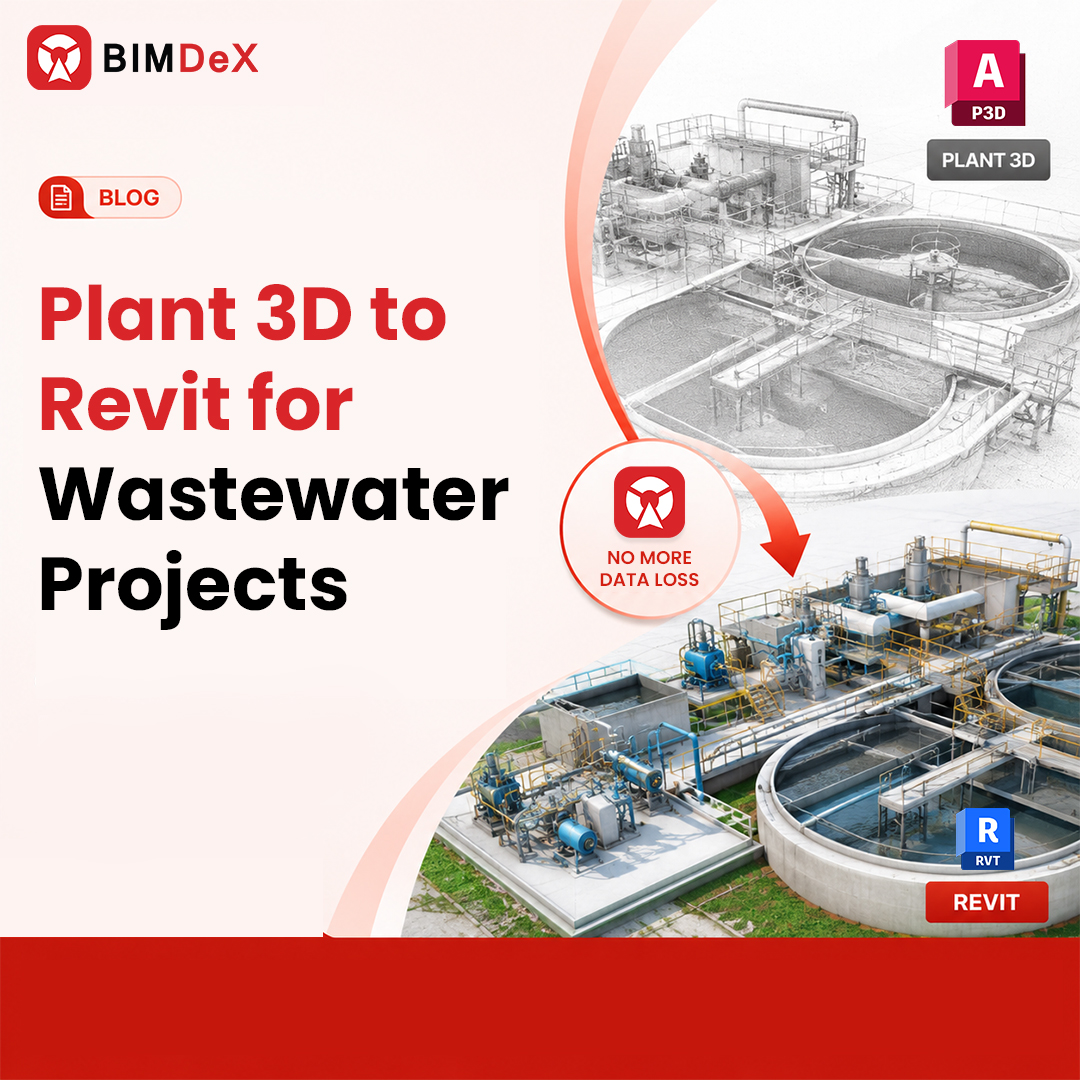
When it comes to converting the constructional, architectural, and other designs or models from one software to another, it becomes essential to bring comprehensive model metadata together. The reason behind this requirement is simple: just structures or 3D model won’t help in subsequent stages, wherein the components with the inherited information will support the project in diverse stages and allow the project manager and the associates to drive the process better as desired. That said, in this blog, we will dive into the processes involved in maintaining or organizing the metadata during model translation and the role of BIMDeX, a conversion tool to catalyse metadata translation.
Why is Metadata essential?
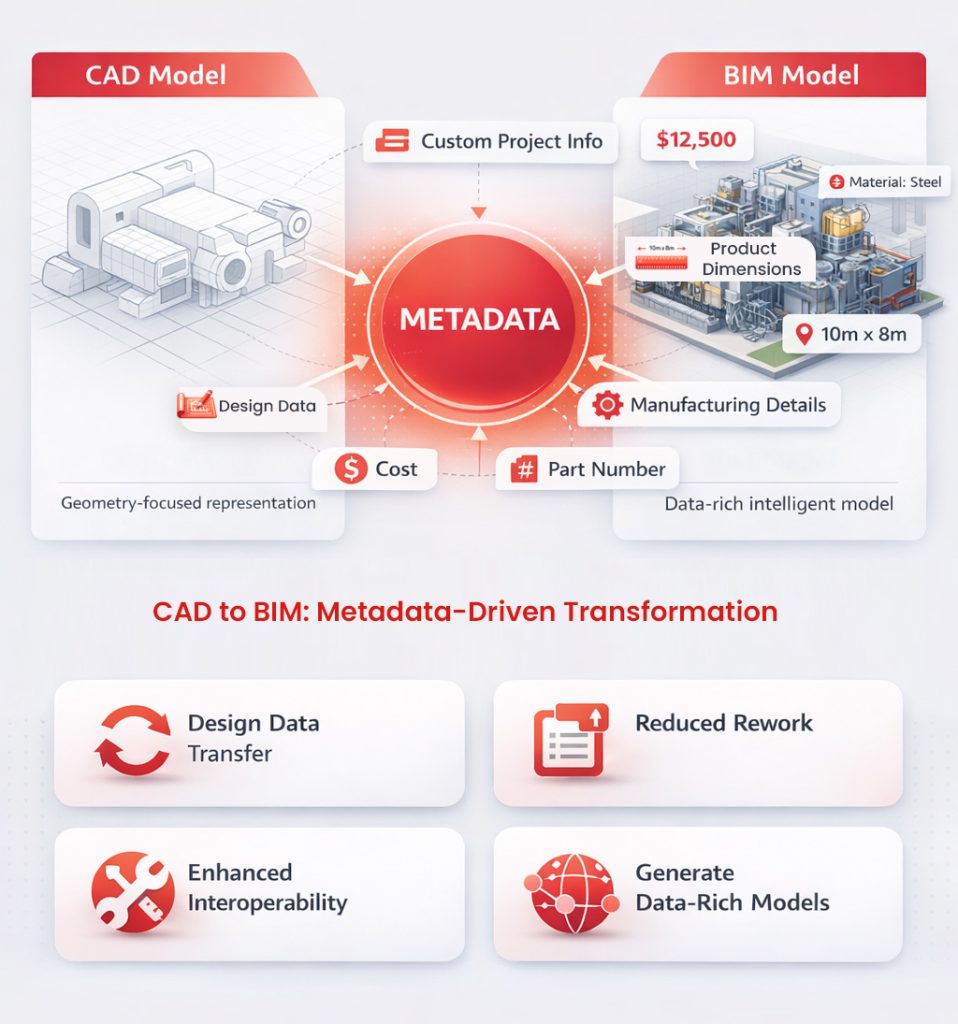
Metadata is nothing but the model properties that encompass the collective information of the model and the components within. A user can easily associate the model information and its associated components in any CAD/BIM software Interoperability. The essential information includes the model dimension, manufacturing details, cost, design data, etc.
Predefining this information can assist the project professionals in easily locating the model components and understanding the respective information and making more informed decisions. This can be more effectively helpful at the implementation stage, and this precision can save ample time and effort for the project teams.
Consequences of missing metadata
When a model conversion method or strategy does not follow a better metadata translation process, it affects the whole project and sometimes can lead to costly mishaps. A model that is transferred without the comprehensive metadata is mere geometry and nothing more than structures. A user or a professional cannot witness perfection with the project with just geometry; wherein extensive information is required.
Missing out on critical information
Improper metadata maintenance can lead to missing out on object properties like component dimensions, materials requirements, manufacturer, component fire ratings and more. That information is absolutely essential when translating the models from one software to another.
This data loss or misinterpretation can be an aftermath for a BIM project where the projects require more information to derive estimations, schedule work, and derive Bill of Materials (BOM).
Chances of Rework
Inconsistent metadata conversion can affect the whole metadata credibility and force the users to re-enter the metadata manually. This results in rework that consumes more time and effort from the user’s end.
Apart from this, the inconsistent metadata conversion will result in distorted clash detection abilities in the BIM model. The data gets distorted, and when two models run for clash detection, the result cannot be accurate or even precise, affecting the scope of coordination.
Inefficient Interoperability
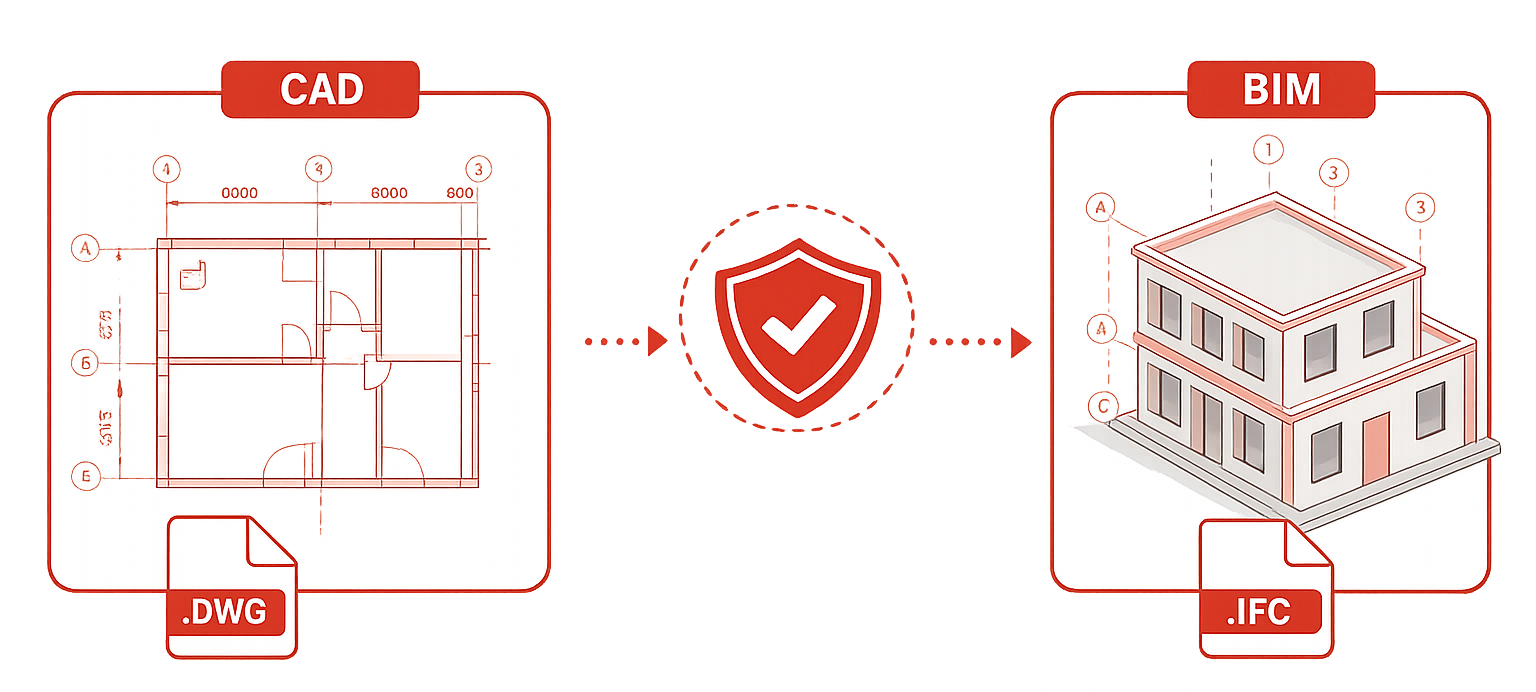
Interoperability is more important when it comes to converting models between software solutions, especially when converting between CAD and BIM software. During interoperability, maintaining metadata information is essential. No metadata transfer or inconsistent metadata transfer in the Interoperability solutions will lead to inaccuracy in the conversion results and cause a lot of rework and manual efforts.
A solution to maintain metadata during model translation
Inconsistencies are open for rectification, and in the case of inconsistencies with metadata maintenance, having a reliable tool to catalyse metadata transfer is an advantage.
An eminent tool can streamline the model translation by capturing comprehensive metadata; users can find the properties from the native software in the recipient software without any misconceptions.
That efficient tool can either transfer the 3D models with compatible file formats or through plugins that can export and import models from one software to another; it can be CAD and BIM software. The plugins and compatible file formats can take the whole model or even allow for a customizable model transfer, where the metadata gets captured accurately and will be translated without distortions. Since properties are more important in the project’s long run, using a tool for model translation and metadata conversion works better than primitive methods.
BIMDeX – The efficient solution for stable metadata management
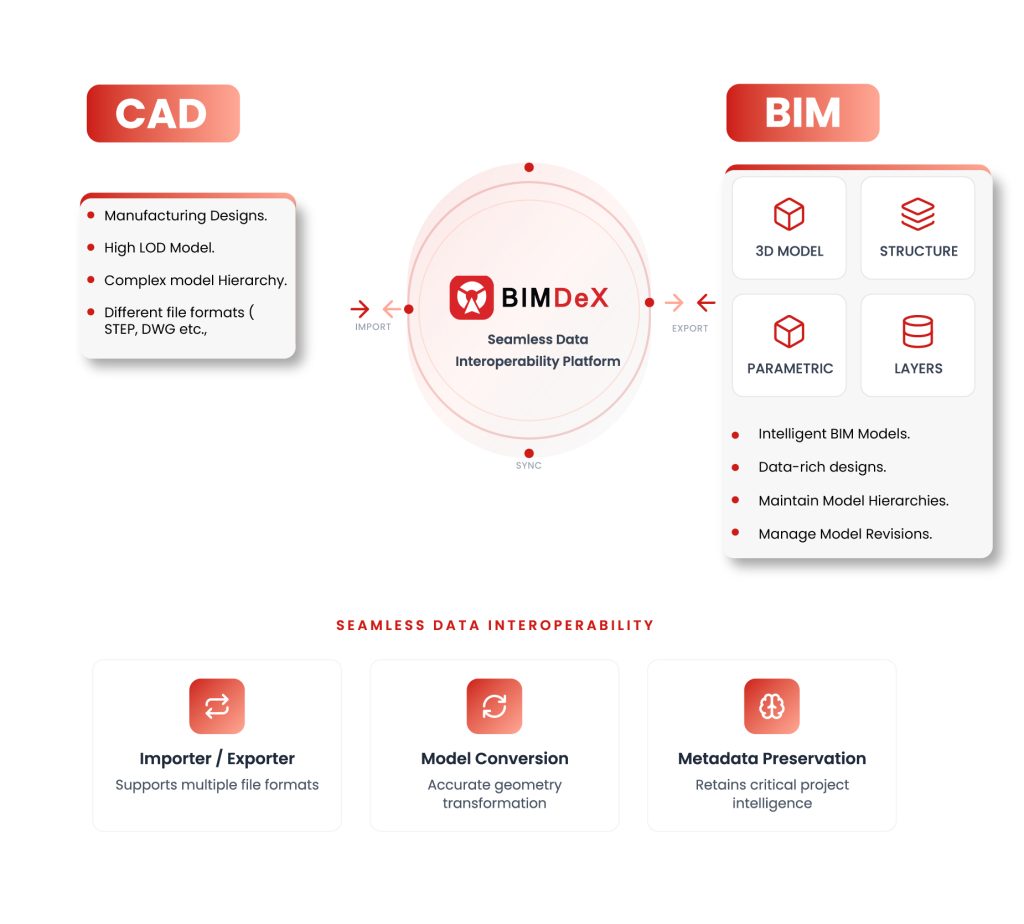
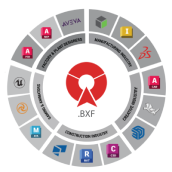
Having said a tool for metadata management, here is BIMDeX, an interoperable model conversion solution to preserve the metadata without misconceptions.
This interoperable tool offers exporter and importer plugins to convert the models. Here, apart from metadata translation, users can do a lot more. The model can be categorized, simplified, transferred based on coordinates, file sizes can be reduced, consecutive changes or revisions can be transferred, and bulk models can also be transferred in a simple way.
The right solution can save ample time and effort for the users who prefer desirable and quality model conversion. The reason to suggest this solution is that it extends preferable options for the users; each user with the exporter and importer plugins can customize the properties that are required. With this feature, it is possible for the professionals to extract only the essential information and not the whole set of data, which sometimes can confuse the project flow.
Closing Thoughts
Maintaining metadata can assist in various stages of a project and improve the scope of project lifecycle management (PLM) as well. That said, having a reliable solution with effective aspects can essentially catalyse the whole metadata preserving process. BIMDeX can be an ideal solution for this; Get in touch with BIMDeX and acquire eminence at every stage of the project.